10 Must-See U.S. National Parks: Fast Facts Guide
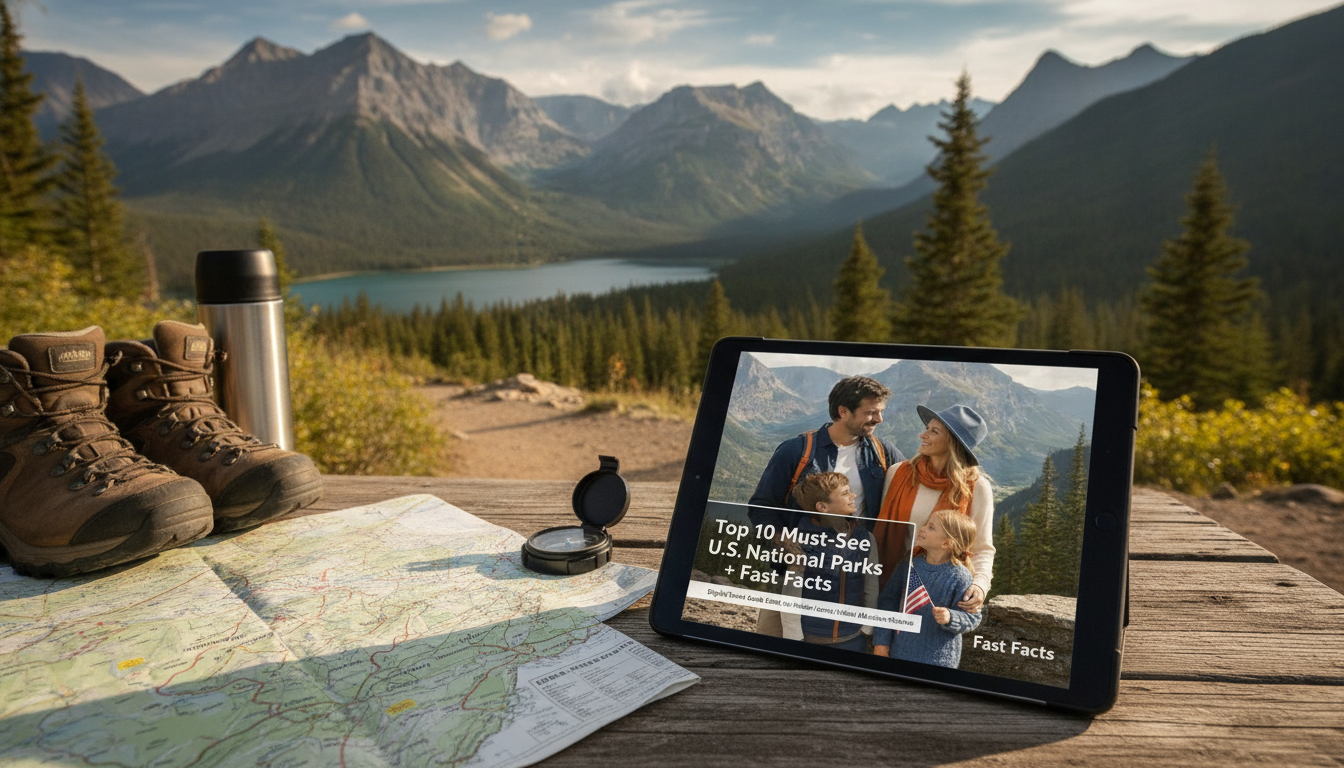
Top 10 Must-See U.S. National Parks + Fast Facts: A Digital Travel Guide for Nature Lovers, Hikers, and Adventure Planners
Big landscapes, iconic trails, and wildlife moments are easier to plan when the essentials are in one place. This digital travel guide highlights ten standout U.S. national parks with quick fast facts and planning-friendly details so nature lovers, hikers, and adventure planners can map routes, pick seasons, and build a trip that fits their pace.
What This Digital Guide Helps With
- Narrowing down which parks match preferred scenery, activities, and travel style
- Getting fast facts at a glance for quicker early-stage planning
- Building a realistic itinerary that balances driving time, hikes, and viewpoints
- Preparing for common constraints like limited lodging, timed entry, and seasonal road closures
- Keeping trip notes in a portable format for phone, tablet, or offline storage
For official park updates, closures, and alerts, check the National Park Service and its trip-planning hub on fees, passes, and reservations. To keep wild places wild, follow the core principles from the Leave No Trace Center for Outdoor Ethics.
The 10-Park Shortlist at a Glance
- Use this list to compare regions, signature landscapes, and typical trip lengths before committing to flights, rentals, and lodging
- Mix one “anchor park” with nearby secondary stops to reduce long driving days
- If crowds are a concern, prioritize shoulder seasons and less-visited areas within each park
| Park | Best for | Typical first-visit time |
|---|---|---|
| Grand Canyon | Rim viewpoints, day hikes, geology | 1–3 days |
| Yosemite | Waterfalls, granite cliffs, classic hikes | 2–4 days |
| Zion | Canyon hikes, narrows-style routes, overlooks | 2–3 days |
| Yellowstone | Geysers, wildlife, geothermal basins | 3–5 days |
| Glacier | Alpine lakes, scenic drives, big hikes | 2–5 days |
| Rocky Mountain | High-elevation trails, wildlife, scenic roads | 1–3 days |
| Great Smoky Mountains | Forest hikes, waterfalls, family-friendly drives | 2–4 days |
| Arches | Rock formations, sunrise/sunset photography | 1–2 days |
| Acadia | Coastal trails, carriage roads, dawn viewpoints | 1–3 days |
| Olympic | Rainforest, mountains, beaches in one trip | 2–4 days |
How to Use Fast Facts to Build a Better Itinerary
- Start with seasonality: verify typical road openings, snowpack, monsoon heat, and wildfire smoke risk windows.
- Match hikes to fitness and time: pair one longer hike with one short scenic stop per day to avoid itinerary overload.
- Plan for park logistics early: timed-entry systems, shuttle routes, and limited trailhead parking can decide daily start times.
- Group by geography: cluster parks by region (Southwest, Rockies, Pacific Northwest, Northeast) to reduce transit days.
- Build two lists: a “must-do list” and a “bonus list” so weather changes don’t derail the trip.
A practical rhythm for first-timers is: early start, one headline hike or major scenic drive segment, a mid-day picnic or ranger-area stop, then sunset viewpoints close to your lodging. It keeps the day ambitious without turning it into a race between trailheads.
Trip-Ready Planning Checklist (Hikers and Adventure Planners)
- Permits and reservations: lodging, camping, backcountry permits, and timed-entry rules where applicable.
- Safety basics: water plan, layers, sun protection, headlamp, navigation, and an emergency contact plan.
- Trail selection: confirm distance, elevation gain, exposure, and turnaround times for daylight.
- Wildlife and food storage: follow region-specific guidance for bears and other wildlife.
- Accessibility and pace: identify viewpoints and short trails for mixed-ability groups.
Small details often decide the day: whether a shuttle starts before sunrise, if a scenic road closes at dusk, or where parking fills first. Lock those facts down first, then build hikes and photo stops around them.
Who This Guide Fits Best
- First-time national park visitors who want a curated “top 10” starting point
- Hikers who prefer quick comparisons of park highlights before selecting routes
- Road-trippers building multi-park loops and needing fast facts to reduce planning time
- Gift-givers looking for a practical digital resource for outdoorsy friends and family
Digital Format Tips for Travel Days
- Download to a phone/tablet and keep a backup copy available offline when service is limited
- Create a simple folder with reservations, maps, and the guide for quick access at trailheads
- Use highlights or notes to mark priority viewpoints, hikes, and meal stops
- Pair the guide with official park alerts for real-time closures and hazard updates
Shop Digital Guides (Instant Download)
- Top 10 Must-See U.S. National Parks + Fast Facts | Digital Travel Guide eBook for Nature Lovers, Hikers & Adventure Planners
- Online-Dating Profile Blueprint | Printable Guide to Authentic Dating Profiles, First Messages, and Better Matches
- What to Do When Your Toddler Has Nightmares | Ebook Guide for Parents | Practical Comforting Tips & Bedtime Solutions
FAQ
How many days are enough for a first national park trip?
Plan 2–4 days for a single headline park, especially if you want at least one longer hike plus scenic drives. For a regional loop, 5–10 days tends to feel balanced once you factor in travel time, shuttles, and parking.
When is the best time to visit popular parks to avoid crowds?
Shoulder seasons (spring and fall) and weekday starts usually reduce congestion without sacrificing the experience. Keep in mind that high-elevation parks may have a shorter summer access window, and timed entry can still apply.
What should be prioritized when planning hikes in a new park?
Prioritize difficulty, elevation gain, exposure, water needs, and available daylight, then work backward to a realistic start time. One anchor hike per day plus flexible backups helps you adapt to weather and trailhead parking limits.












Leave a comment